Innovation doesn’t happen in isolation. It takes root in real places, shaped by the people who live, work, and care there. This space highlights practical breakthroughs, adaptive designs, and system-level insights that reflect the complexity of diabetes care worldwide. From new technologies to grounded fieldwork, these stories show how progress happens when innovation is guided by context — and driven by purpose.
In diabetes care, mobility is often the first thing at risk — and one of the hardest to restore. A new innovation under study may help patients stay in motion while healing, pointing to a future where science supports not only outcomes, but continuity and dignity.
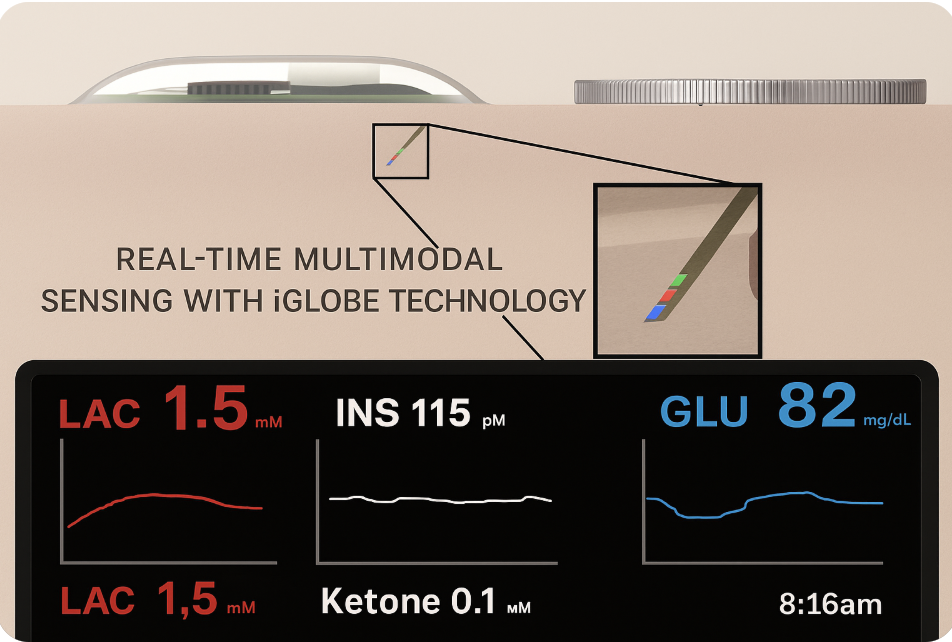
At UCI, Dr. Elliot Botvinick’s team is testing a device that measures glucose and lactate to anticipate how exercise affects people with type 1 diabetes — paving the way for smarter insulin delivery and safer movement.
Can nerve signaling accelerate wound repair? A new study by Dr. Yen-Zhen Lu of Monash University — winner of the Peter Sheehan Young Innovator Award — explores how engineered neuropeptides may unlock faster healing in diabetic tissues, offering fresh hope for one of the most persistent challenges in diabetes care.
This brief overview highlights several signals shaping regenerative innovation in 2025, including advances in bioactive materials, early-phase cell and vesicle approaches, technology-enabled wound assessment, and the translational pressures guiding development across the field.